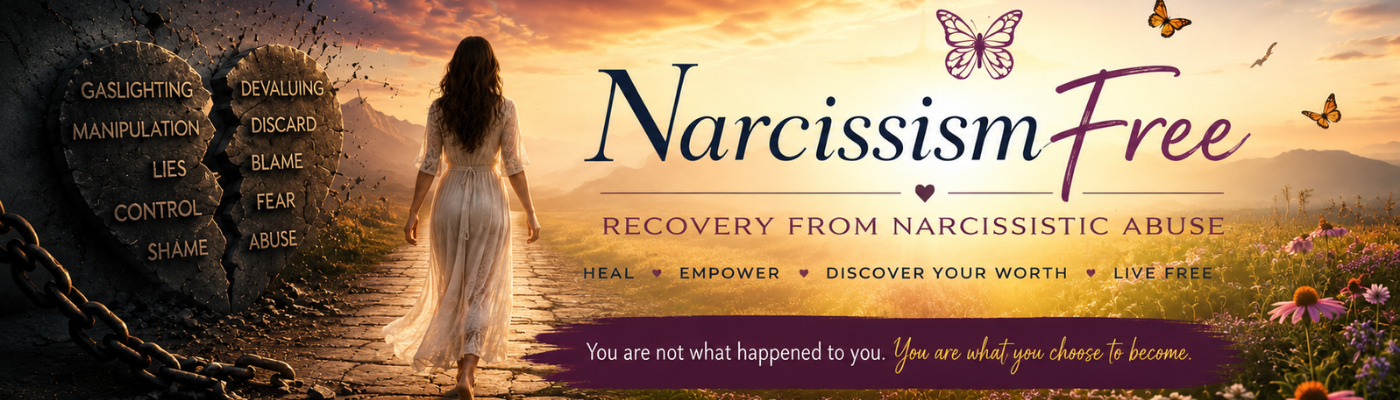
Are you someone who is recovering from narcissistic abuse? Or perhaps you’ve already recovered but have a history of getting involved with narcissistic people?
For many years I seemed to attract narcissistic people into my life. You could say I was a narcissist magnet. And trust me, that isn’t fun.
The recovery process was one of the most difficult journeys of my life. Not only did I go through it myself, but I have spent more than two decades helping others heal from narcissistic abuse, trauma bonds, codependency, and toxic relationship patterns.
What I eventually learned is that recovery goes much deeper than simply getting over a narcissist. The real work is breaking the patterns within ourselves that keep drawing us into the same painful experiences.
Most people think the narcissist is the problem. And yes, narcissistic people can create tremendous damage in our lives. But if we keep finding ourselves in similar relationships over and over again, we have to be willing to ask a deeper question: Why do I keep attracting people who hurt me?
I don’t believe we consciously choose these experiences. I believe we get caught in what I call trauma loops. Trauma loops are emotional patterns that were often formed long before the narcissist entered our lives. They may have started in childhood through emotional neglect, criticism, abandonment, rejection, invalidation, or growing up with narcissistic parents or caregivers.
These wounds create beliefs about ourselves.
- I’m not good enough.
- I have to earn love.
- My needs don’t matter.
- If I can just get this person to love me, then I’ll finally feel worthy.
Those beliefs become magnets. And those magnets tend to attract people who will reinforce the very wounds we are trying to heal.
That is why leaving one narcissist doesn’t automatically solve the problem. If the underlying trauma loop remains intact, another person often shows up to activate it again.
The first step in breaking the pattern is becoming aware of it. You have to be willing to look honestly at your life.
Where did these patterns begin? Who taught you what love looked like? Who made you feel invisible? Who made you feel that your worth depended upon pleasing others?
These are not easy questions, but they are necessary ones. Once you begin to see the pattern, the next step is developing fierce self-love. And I do mean fierce.
One of the things narcissistic people do exceptionally well is make other people feel worthless. When someone can make you feel worthless, they have power over you. They can manipulate you. They can control you. They can pull your emotional strings.
The tragedy is that many survivors spend years trying to get validation from the very people who are making them feel unworthy. Think about that for a moment.
We often seek approval from the person who is withholding it. We hope that if they would finally recognize our value, everything would change. But it doesn’t work that way.
The moment you hand someone else the power to determine your worth, you also give them the power to take it away. This is why healing requires a profound shift. You must stop giving other people the authority to define who you are. You stop looking outside yourself for proof that you are lovable, worthy, intelligent, attractive, or enough.
Instead, you begin developing that relationship with yourself. You begin saying:
- I know my worth.
- I know who I am.
- I know what is true about me.
And if someone disagrees, that doesn’t change my value. This is where your power returns.
People will still criticize you. They will still judge you. Some will attempt to devalue you. But instead of collapsing into self-doubt, you learn to stand firmly in your own truth. You learn to say: “That is your opinion, but it is not the truth about me.”
The stronger your relationship becomes with yourself, the less power other people have over your emotional state. Over time, something else begins to happen. You start setting healthier boundaries. You stop tolerating behavior that you once accepted. You stop chasing people who don’t value you. You stop abandoning yourself to maintain unhealthy relationships.
And when that happens, your entire social circle may begin to change. Some people will walk away. Some relationships will naturally end. Others may become angry because they benefited from the old version of you. Don’t be alarmed by this. It is a normal part of healing.
The healthier you become, the less compatible you are with toxic dynamics.
Many people experience a period of loneliness during this stage. You may wonder if you’ve made a mistake. You may question whether healing is worth it. But that loneliness is often the space between who you used to be and who you are becoming.
Eventually, the question shifts from: “How do I recover from narcissistic abuse?”
to: “What’s next?”
For me, this is where the journey became exciting. Recovery was no longer about the narcissist. It was no longer about the toxic relationship. It became about creating a life that I genuinely loved. A life built on self-respect, freedom, health, vitality, meaningful relationships, and personal growth. Because healing is not simply about surviving what happened to you. It is about becoming who you were always meant to be.
And that begins the moment you stop giving your power away and start reclaiming it for yourself.